


Paddling for Koi: Bowfishing the Far North
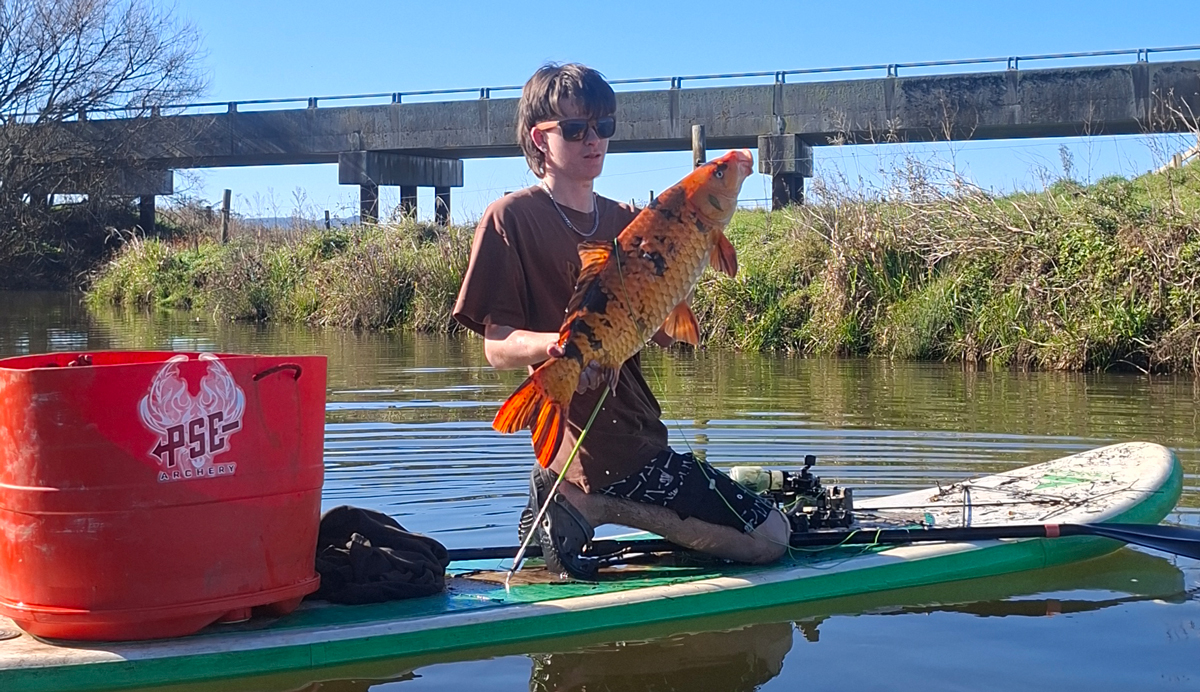
Armed with bows and paddle boards, 18-year-old Waikato bowhunter Cole Avery and mate Cam Mitchell spend hours exploring shallow lakes, rivers and backwaters in search of koi carp. Cole shares the challenges, close calls and excitement of hunting carp from the water — and why there’s always a reason to paddle around the next bend.
Hours of paddling, shallow backwaters and the constant possibility of a big fish beneath the surface — 18-year-old Waikato bowhunter Cole Avery explains why he and mate Cam Mitchell have taken their koi hunting to paddle boards.
By Cole Avery
There’s something different about bowfishing koi carp from a paddle board. You’re low to the water, exposed to the sun, and every movement matters. There’s no motor carrying you into the next spot and no comfortable seat when the hours start adding up.
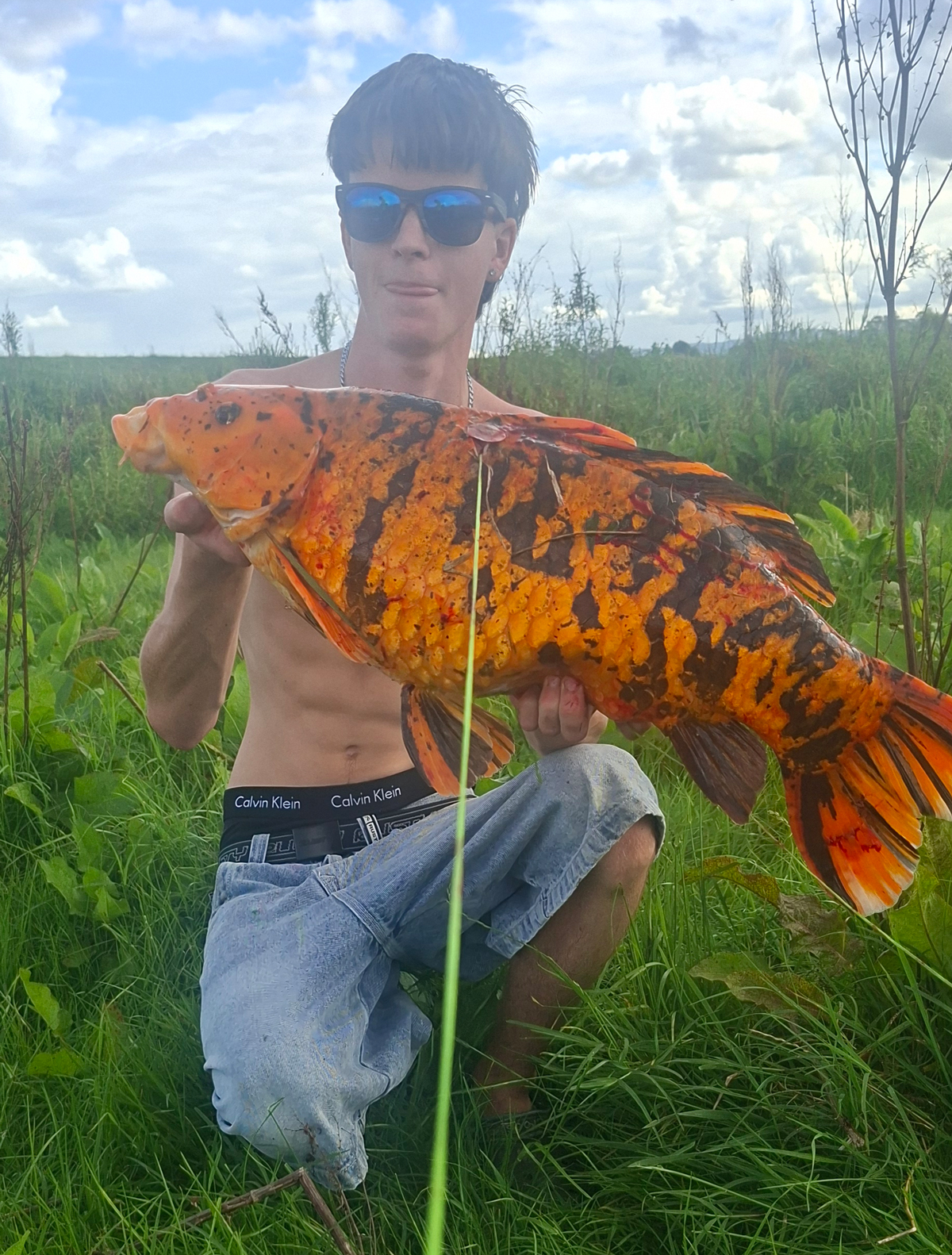
It’s just me, my best mate Cam Mitchell, our bows, a handful of arrows and the possibility of koi carp lurking beneath the surface. I’m 18 and from the Waikato, and Cam and I have spent plenty of time bowfishing together. Some of our biggest missions involve paddling for hours, covering lakes, rivers and backwaters in search of fish.
We launch early, load the boards with our gear and start working the edges. Our boards have half-barrels secured to the back to hold the carp we shoot, while our bows sit at the front within easy reach.
The hardest part is often simply the paddling. After several hours your arms and shoulders start feeling it and your legs are tired from constantly balancing. But then you spot a big dark-orange shape moving through the shallows and suddenly none of that matters.
We slowly turn the board.
The fish disappears.
We wait.
Then it appears again, cruising across the bottom. That’s when everything gets serious.
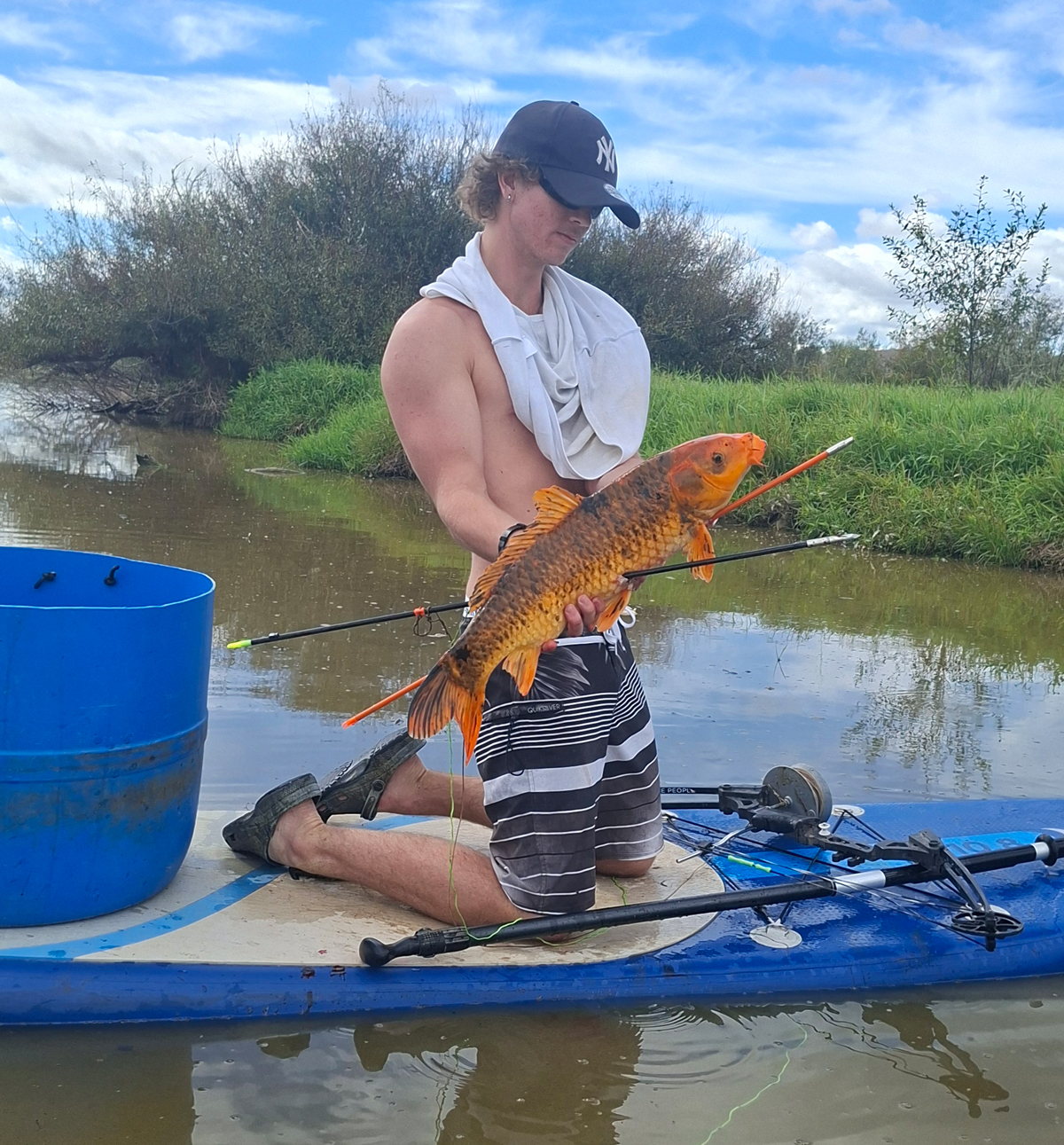
Bowfishing is completely different from traditional fishing. We’re not waiting for a bite; we’re actively hunting the fish. You have to spot the carp, judge its movement and compensate for the distortion caused by looking through the water.
Add a paddle board into the equation and there’s another challenge — balance. One wrong movement can send the whole board rocking just as you’re lining up a shot.
We found that out in spectacular fashion on one trip when the wind picked up and the lake became increasingly choppy. Small waves started breaking over the board and eventually our load shifted.
Suddenly, more than 70 koi carp I’d shot went straight off the back of the paddle board and into the water.
After plenty of swimming and scrambling around, we somehow managed to get them all to shore.
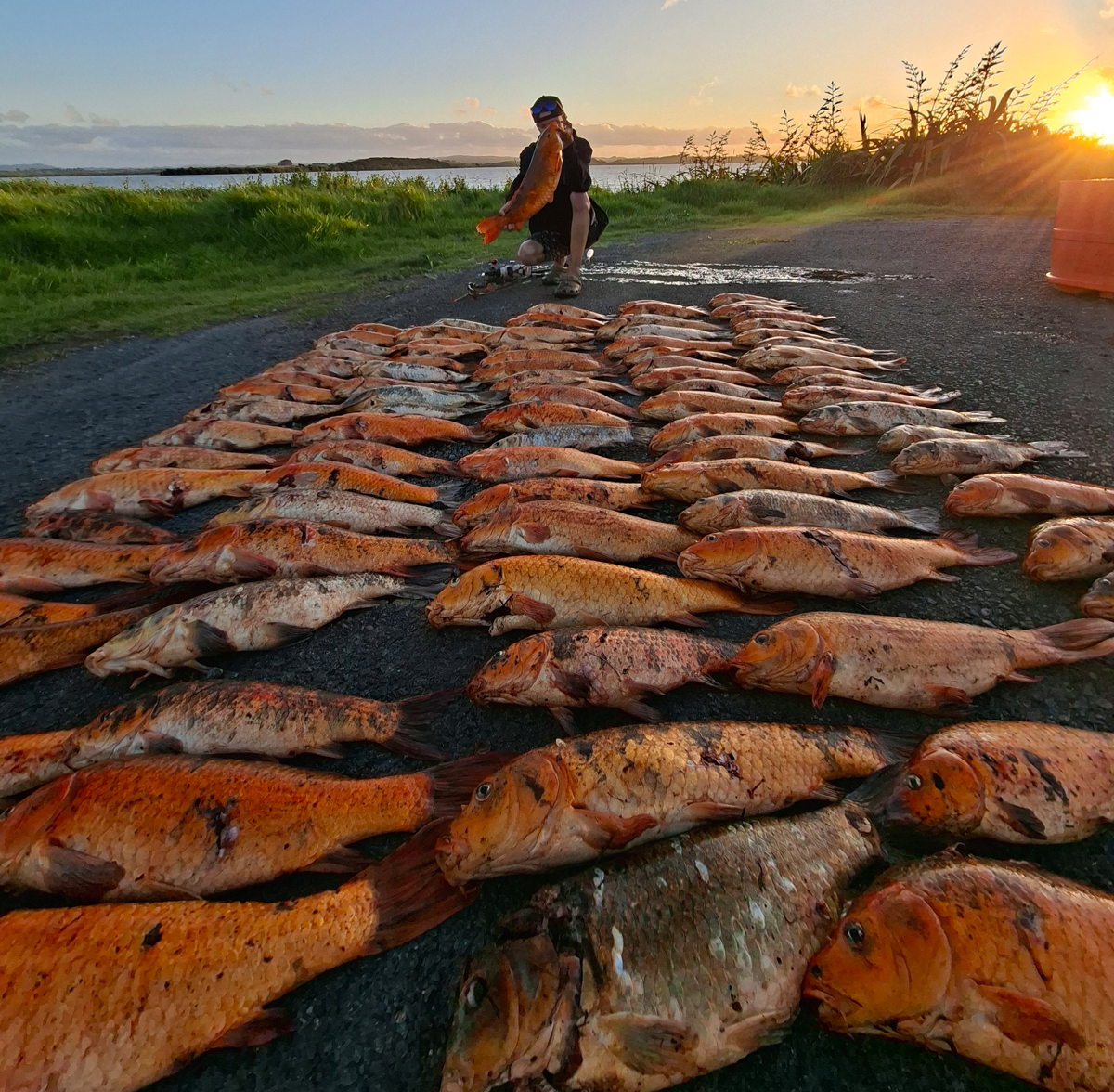
The fish themselves can be surprisingly wary, particularly in clear, shallow water. Sometimes a koi will appear for only a few seconds before disappearing into deeper water or thick weed.
That means a long day isn’t necessarily about constantly shooting fish. Often we’re slowly covering huge amounts of water, checking shallows, channels and weed beds until we find an area holding good numbers.
There’s always one thought that keeps us paddling: What if the next bend holds the biggest fish I’ve ever seen? That’s particularly true when we head north and explore the swamps and backwaters. There are drains, rivers, flooded areas and shallow water everywhere, and some places take serious effort to reach.
That’s where paddle boards come into their own. They’re quiet and can get us into shallow flooded areas that would be difficult to access with a larger boat.
It’s not always comfortable. The weather changes, the wind gets up and sometimes the paddle home seems twice as long as the paddle out.
But those are usually the days we remember. We’re exhausted, the boards are covered in gear and carp blood, the sun is dropping and we’re still talking about the fish we saw earlier.
And then there are the big ones.
Seeing a huge carp glide into view after spending hours searching makes you forget about tired arms and aching legs. Suddenly your entire focus is on that one fish.
Sometimes the arrow connects. Sometimes the carp disappears at the last second. Either way, it’s enough to keep us coming back.
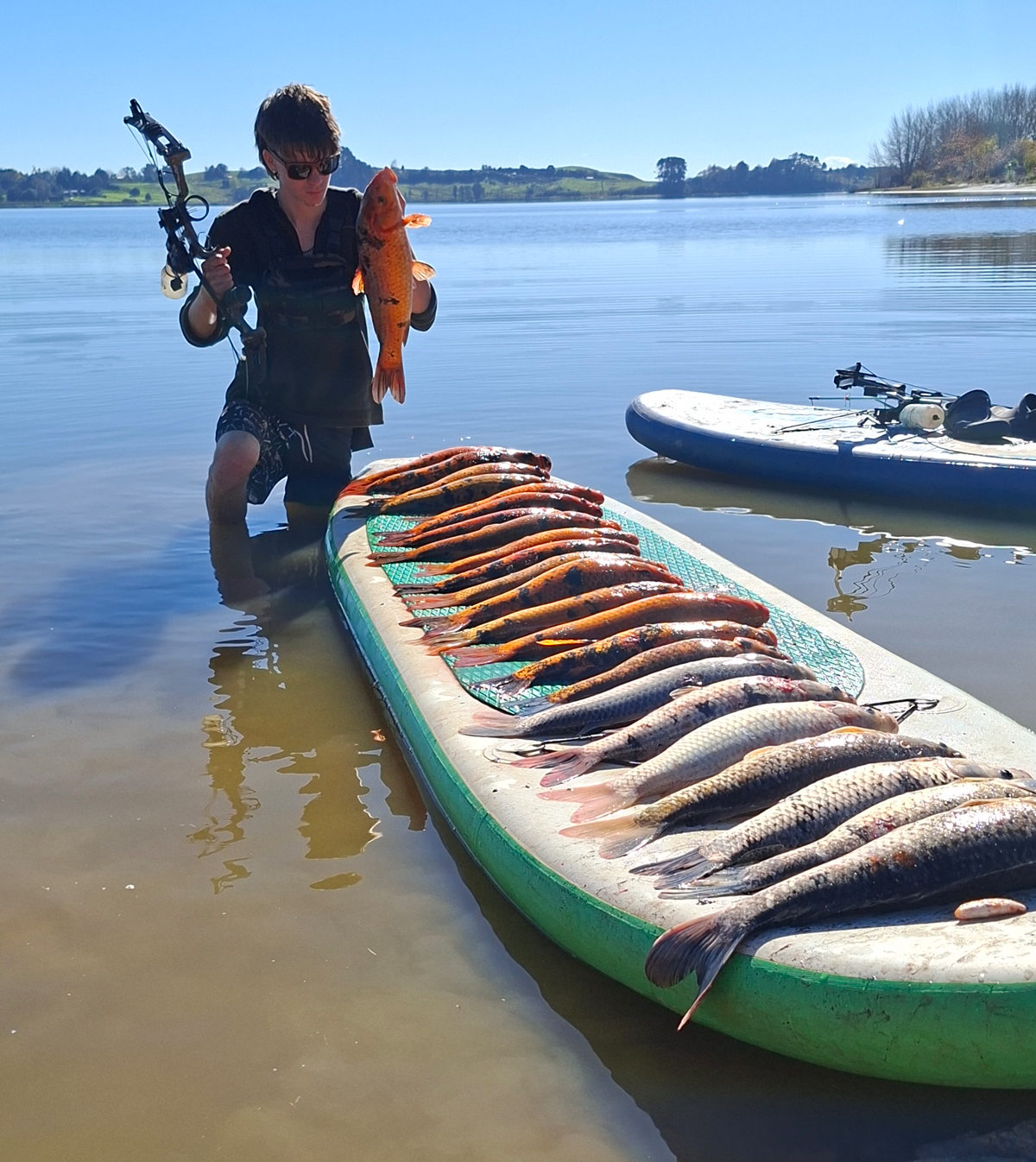
Bowfishing from a paddle board certainly isn’t the easiest way to hunt koi carp. It’s tiring, uncomfortable and occasionally frustrating, but that’s also what makes it rewarding.
For Cam and me, it’s about more than shooting carp. We’re exploring new water, paddling into places we’ve never seen before and chasing the possibility of finding a monster.
No matter how tired we are, there’s always a reason to paddle a little further.
Because somewhere beyond the next bend could be the fish we’ve been looking for.
.jpg)
.jpg)


