Hook a Fish, Not a Fine: DOC steps up Hauraki Gulf patrols
DOC is stepping up patrols and enforcement across the Hauraki Gulf this summer, warning recreational fishers to check marine protection boundaries before heading out. With new protected areas now in place and fines starting at $600, fishers are being urged to know the rules and avoid costly mistakes on the water.
Recreational fishers heading into the Hauraki Gulf this summer are being reminded to check marine protection boundaries, with the Department of Conservation (DOC) preparing to take a tougher approach to enforcement.
DOC is preparing for another busy summer, with increased patrols and enforcement across the Hauraki Gulf/Tīkapa Moana marine protected areas.
The warning comes as the new protection areas enter their second summer, following changes introduced on 25 October 2025.
These established 12 high protection areas, five seafloor protection areas and extensions to two marine reserves, adding 586 square kilometres of protected waters throughout the Gulf.
For fishers and divers heading out from Auckland, the Firth of Thames and Coromandel Peninsula, knowing these boundaries is increasingly important.
Education turning to enforcement
Over the past year, DOC has focused on educating the public about the restrictions.
According to Kirsty Prior, DOC’s Auckland Marine District Operations Manager, staff have attended boat shows and fishing competitions, distributed over 100,000 flyers and installed more than 120 signs at water entry points.
Rangers have also completed thousands of foot and boat patrols.
DOC says the emphasis is now shifting towards stronger enforcement, with infringement fines and prosecutions for breaches.
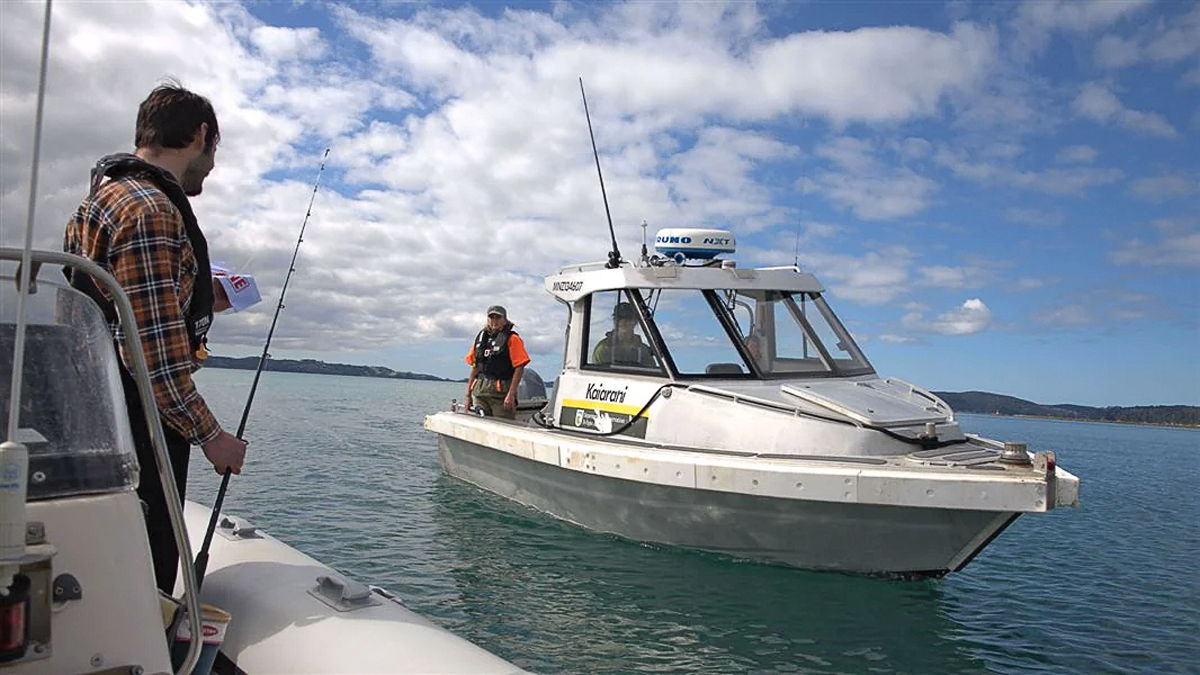
During summer, 34 DOC rangers will conduct boat and shoreline patrols throughout the Gulf.
They will be supported by high-zoom CCTV cameras, drones, New Zealand Police and Fisheries New Zealand.
Particular attention will be given to areas where non-compliance has been identified, including Long Bay-Okura Marine Reserve, Kawau Bay High Protection Area and The Noises High Protection Area.

Fines start at $600
Fishers caught illegally fishing within a marine reserve or high protection area face fines starting at $600.
DOC warranted officers can stop and search boats and vehicles, require identification and seize fishing equipment.
The message is simple: check where you’re fishing before dropping a line.
DOC encourages boat owners using GPS chartplotters and fishing apps to ensure their electronic charts show the latest marine protection boundaries.
Know the difference
Not all protected areas have the same restrictions.
Marine reserves and high protection areas generally prohibit fishing, diving for seafood and gathering shellfish.
Seafloor protection areas are different. These protect sensitive seabed habitats by restricting bottom trawling, dredging and Danish seining.
Recreational line fishing, spearfishing and gathering seafood by hand are generally permitted in seafloor protection areas, provided other fisheries regulations and local restrictions are followed. Careful anchoring is also permitted.
Understanding these differences could prevent an expensive mistake.
With fishing activity increasing over summer, DOC encourages everyone to familiarise themselves with the rules before leaving the boat ramp.
Marine protection boundaries and regulations can be checked on the DOC website.
Suspected illegal activity within a marine protected area can be reported to DOC on 0800 DOC HOT (0800 362 468).
Before heading out, check your charts, know the boundaries and make sure the only thing you bring home is a legal catch — not a fine.