A new era of sika hunting begins
New Zealand's first Herds of Special Interest have now been officially recognised. Discover what this landmark achievement means for hunters and the future of game animal management.
The ability to designate herds of special interest (HOSI) has existed since the Game Animal Council was established in 2013, with a significant amount of sustained advocacy, extensive policy work, public consultation and major legislative change required. Years of effort has finally delivered the results the sector has long strived for in the last few weeks – legal recognition for hunter-led management of New Zealand’s highly valued introduced species.
The first major milestone was the passing of the Game Animal Council (Herds of Special Interest) Amendment Act. This legislation removed the conflict between managing a HOSI in a national park and the existing legislative requirement to exterminate all introduced animals in national parks as far as possible. It does not weaken national park protections, change their public status or restrict public access. Instead, it allows a designated herd to be actively managed for hunting while continuing to protect the natural conservation values of the area.
HOSI is not about creating private game parks, letting animal populations get out of control or restricting hunter access. It is about working with hunters to ensure that hunting is valued, protected and enhanced, and hunters can actively contribute to management outcomes. It is a framework for planned, monitored and adaptive management of a herd that is particularly important to hunters.
The second major milestone was the designation of New Zealand’s first two HOSI – wapiti in Fiordland and sika in the Central North Island.
For both of these HOSI, the goal is to recognise and protect hunting and to manage the herd. Ongoing engagement with hunters is central to achieving by adopting management actions that proactively respond to hunter experiences and hunter observations of the herd and
native vegetation.
For Fiordland wapiti, the HOSI designation provides a stronger legal foundation for the work the Fiordland Wapiti Foundation has carried out for nearly three decades. It recognises an established model in which hunters have invested heavily in herd management, conservation and
maintaining a worldclass wilderness hunting experience.
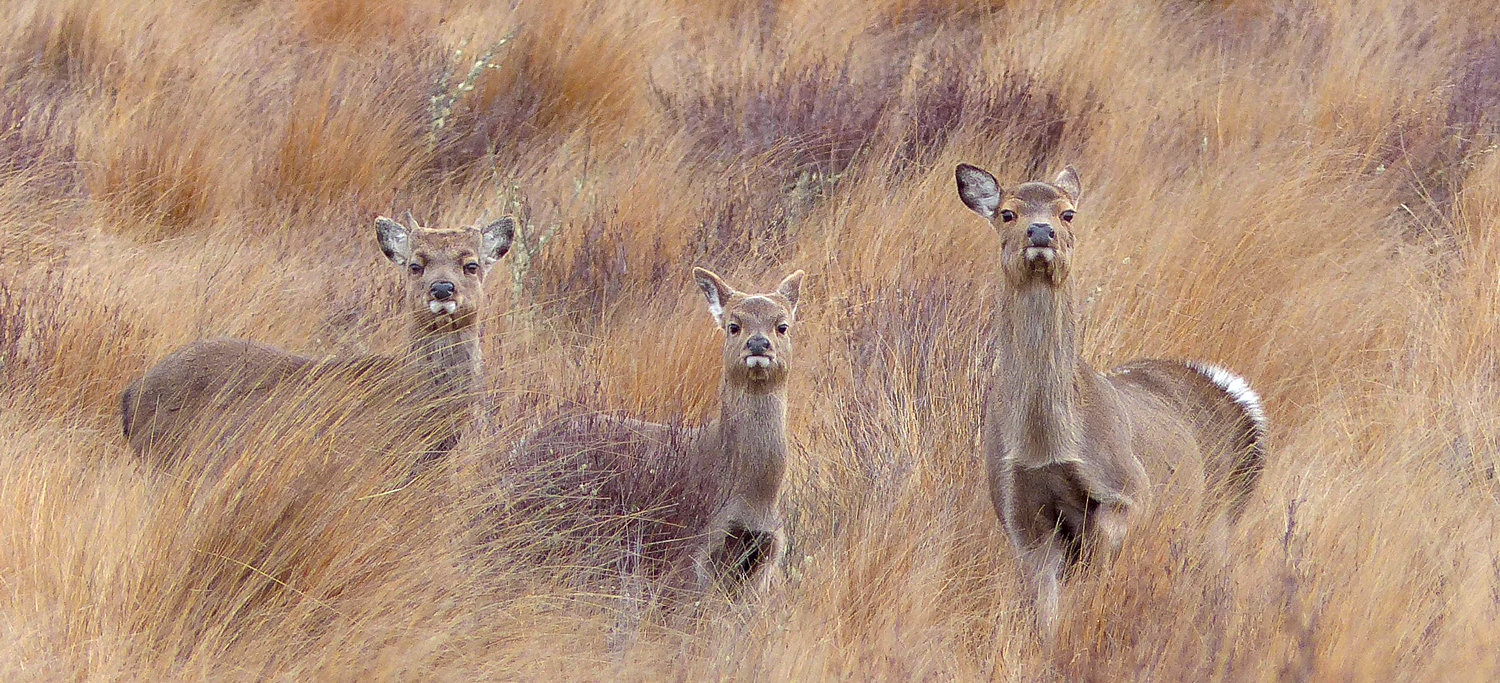
For many Adventurer readers, however, the Sika HOSI will be closer to home. It covers sika within the Kaimanawa and Kaweka Forest Parks and the Kaweka Forest Conservation Area – areas central to North Island hunting culture.

The designation is recognition of the years of hard work by the Sika Foundation, its volunteers and supporters and local hunters. They have contributed an enormous amount of time and practical effort to understanding the herd and developing a workable approach to its long-term management.
Importantly, the designation of a Sika HOSI does not require existing hunters to do anything differently. Current open hunting permits remain valid and the existing conditions applying to the forests remain in place. Public recreational access remains fundamental. Hunters cannot contribute to managing the herd, looking after indigenous species or recovering high-quality wild venison for their communities if they can’t get into the backcountry.
The Sika HOSI will be managed by the Game Animal Council, with day-to-day operations delivered by the Sika Foundation. DOC retains responsibility for ecological monitoring. The aim is to work closely with hunters to understand their experience in the Sika HOSI area and carry out herd management that supports enhanced hunting, forest regeneration, and improved animal quality.
Achieving this may require hunters to place greater emphasis on harvesting hinds in areas where numbers are too high. Fewer animals in better condition mean more food available for each animal and translates to better-quality meat and antlers, and less pressure on the forest. This is the win-win at the heart of the HOSI concept.
There is also a wider opportunity. The Central North Island sika herd is nationally and internationally significant and already draws hunters into the region. Managed well, the HOSI can strengthen the area’s reputation as a hunting destination, support local businesses and community initiatives, provide venison for families and foodbanks, and create more opportunities for hunters, iwi, conservation groups and local communities to work together.
Designation of these first two HOSI is not the finish line. The success of both will depend on hunters engaging, supporting the concept and contributing to selective harvest, the sharing of information, providing assistance for monitoring and management, and continuing other
conservation work.
The hunting sector has worked hard to gain this opportunity; our task now is to prove that we can deliver on the ground.
All the best,
Corina