


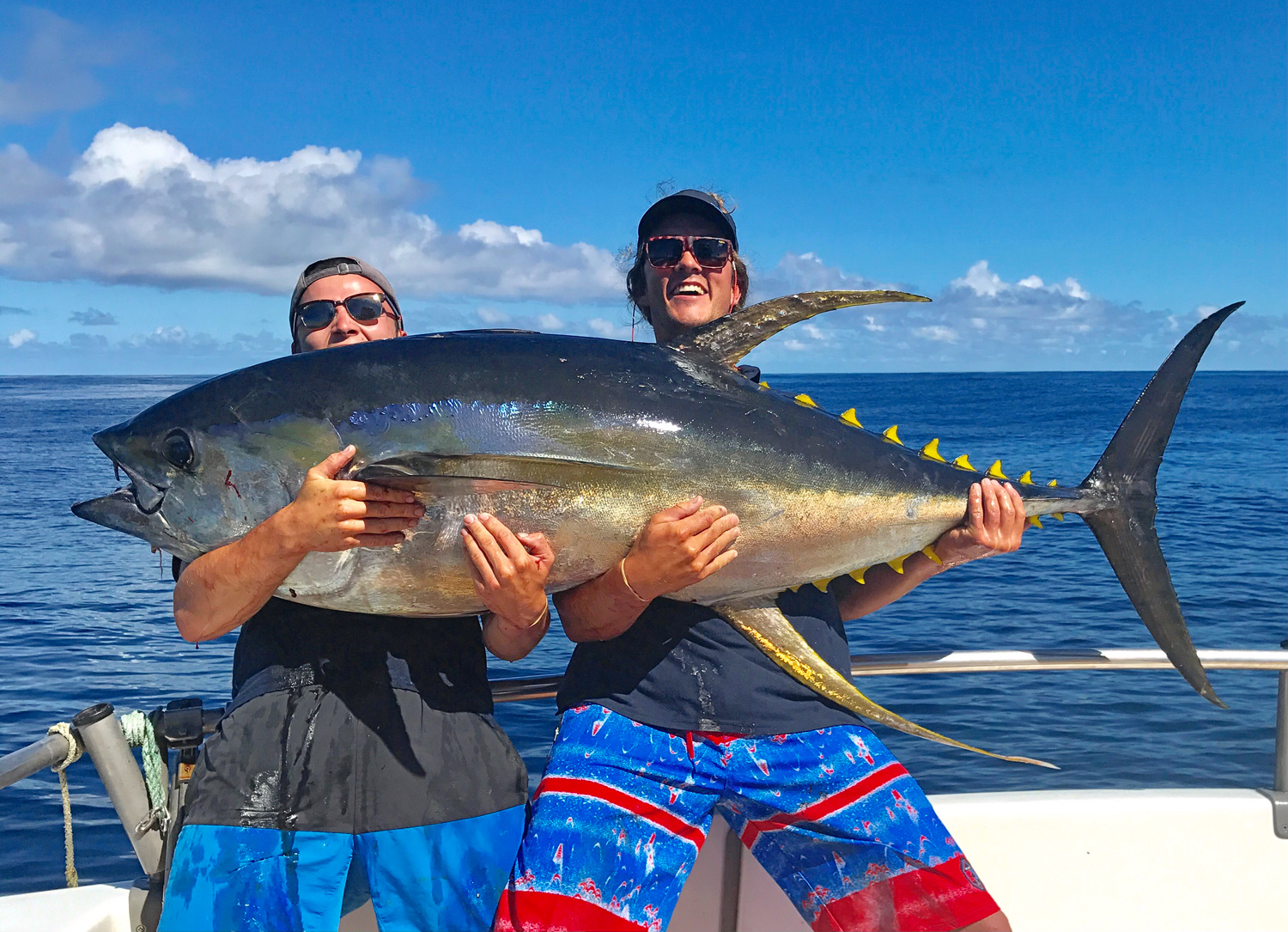
The rise, fall and return of yellowfin tuna
After decades of highs, heartbreak and unanswered questions, yellowfin tuna are back in New Zealand waters — and in numbers few thought possible. Veteran angler Rick Pollock looks back at the glory days, the sudden collapse, and the remarkable resurgence that has anglers buzzing once again.

by Rick Pollock
When Kiwi anglers first started to understand and appreciate this apex pelagic in local waters technology was low but numbers were high.
When I first arrived on the scene in the late 70’s tuna were being pursued by anglers towing hunks of semi-streamlined lead impregnated with white chicken feathers at the end of parabolic solid glass rods with old star drag, low ratio reels – my how things have changed in the interim! This didn’t matter too much since there were so many obliging tuna one could hardly miss regardless of what they did – fishing
was phenomenal!
As time marched on fishing tackle morphed in a spiralling upward trajectory with new and improved products becoming available every year. US Penn reels, the mainstay for decades, suddenly began giving up their heretofore huge market share to a couple Japanese upstarts with the invention of lever drags and higher gearing prominent. Lures made of resin were keenly accepted and used to great effect. Lines got stronger with smaller diameter – and the list goes on.
Once we got into the late 80’s and 90’s anglers not only had better tackle to arm themselves with but modern techniques to employ. Yellowfin tuna went from a relatively rare catch to a mainstay, particularly in the Eastern Bay of Plenty.
Savvy anglers ditched their trolling outfits and lures for jig and live bait rigs – putting them to great advantage with increased catches. “Meatball” fishing in the BOP produced so well that Whakatane became known not only as the yellowfin capital of New Zealand but Australasia! Yes summer and yellowfin were synonymous, equating to consistent action that captivated local anglers as well as those from around the globe – the gold rush was on!
This lasted right up until the turn of the century when things inexplicably took a sudden and dramatic turn for the worse. After taking this annual run for granted suddenly things didn’t just get worse – the wheels fell off! The Whakatane Sportfishing Clubs prestigious summer Tuna Tournament, one of the country’s biggest and best known, had to be renamed after years of ZERO tuna landed over the four day comp! Yellowfin tuna became a true rarity right around the country, even in its previous BOP stronghold.
As there were so many reasons put forward for their apparent demise it soon became intrinsically obvious that it had nothing to do with overfishing in our EEZ. Whatever was going wrong was happening in far away waters of the South Pacific. The commercial purse seine fleet, many of which were “super seiners” capable of holding in excess of 1000 tonnes, was expanding exponentially while using their own floating FADS to great effect.
Each of these floating FADS had the electronical wizardry to tell their owners not only exactly where they were but how much fish were underneath them and at what depth in real time. As soon as a predetermined amount of tonnage was present these seiners would pounce, making huge hauls in the hours of darkness. Seemingly the fish didn’t stand a chance and were being caught in record quantities before they could reach our waters.
Historically our yellowfin fishery mimicked that of the east coast of Australia. When we went down they did the same. Then, after over two decades of yellowfin doldrums on both sides of the Tasman there was a notable, if not short lived, tuna run off Sydney which gained lots of interest. This was duly followed by a similar situation here – not a lot or for long but suddenly there was renewed hope. Each succeeding season showed just a little more promise as the fishery displayed definite signs of recovery. Since tuna grow so fast a full recovery was in the realm of possibility. Could it be?!?!
Then came the almost unbelievable season of ’25 – what many feel was the best yellowfin fishing this country has ever seen. The floodgates were open! Not only were there plenty on both coasts but the average size was unprecedented – eureka! Last season’s catches were on another scale and this after most everyone had written them off!
So how about lure selection as most effort will enlist placing these enticements on varying waves within boat wakes? Lots to consider but a few hints should simplify choices to maximise your chances. First we consider size. A common mistake many anglers make is not just lure length but, more importantly, diameter. In any fishing scenario it’s important to remember the old adage “match the hatch”, which of course originated from trout fly fishermen. This has direct relevance to all types of angling and yellowfin are no exception.
I’d recommend smaller rather than larger for best results since the bulk of yellowfin forage on smallish baitfish. Not small enough to keep getting stopped by skippies and small albacore but not oversized lures that will eliminate the interest from most larger tuna.
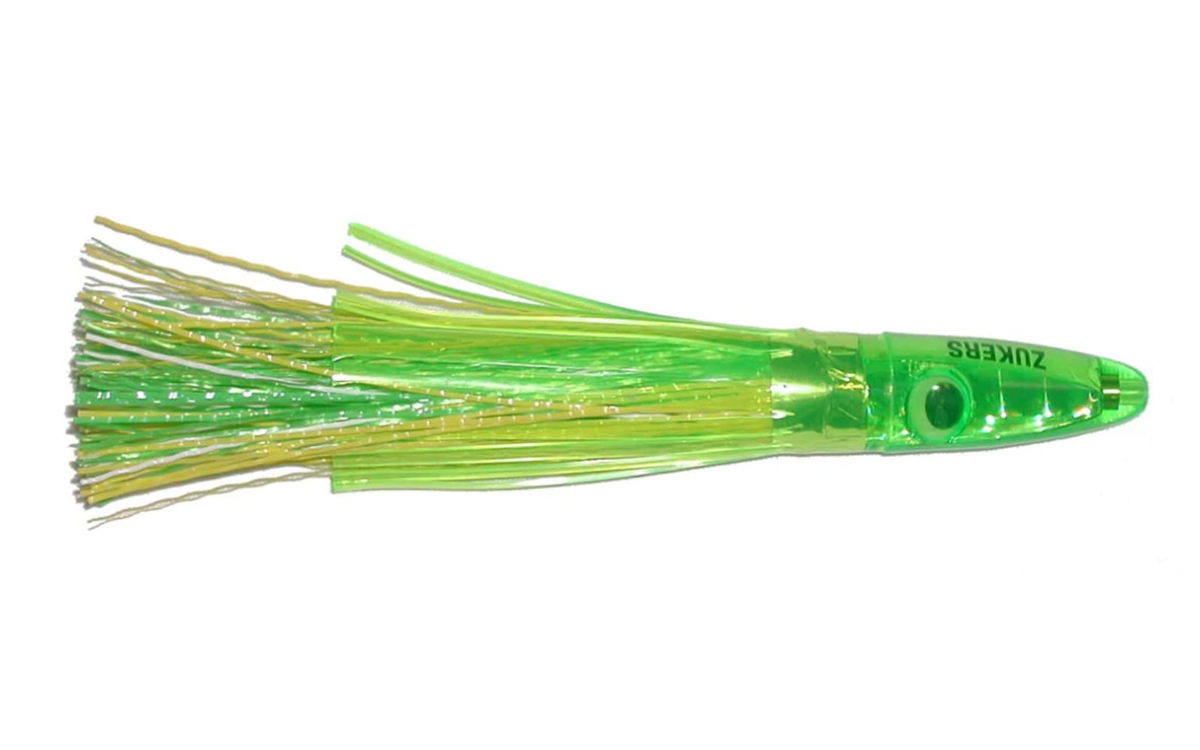
Colour? This is a very subjective topic with no clear cut answers. Simply put nothing will work all the time but everything will work sometimes! Can’t get much more abstract than that statement but here’s a couple rules of thumb that can help selection in this regard. First is dark lures for overcast days and, conversely, bright lures for cloudless days.
Next I ALWAYS recommend at least one dark lure (purple/black) and a bright one (fluro) in your pattern. After that pick and choose to suit yourself and don’t be afraid to experiment. On any given day a weird and whacky colour you’ve never had previous luck with will be the dominant choice!
Finally the last few seasons both bibbed and bibless running lures have produced great catches and often at times when conventional lures are failing. As many come rigged with trebles one should rerig with either doubles or singles as trebles on tuna usually end in heartbreak.
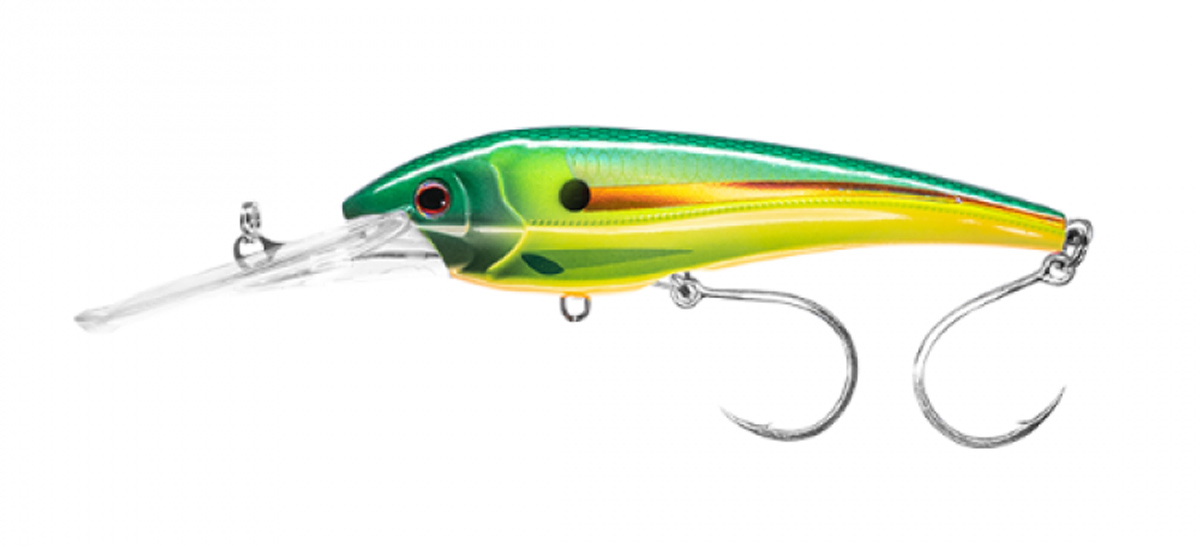
Position? Every boat will have “sweet spots” where most strikes occur – and they’re all different. Again experimentation is a must, there’s no shortcuts here. Watching how your lures respond at different speeds and in various conditions is key – be observant and don’t be afraid to switch out if you’re not happy with a certain lures performance.
So the big question on everyone’s lips – where to from here? We’ve had yet another early start with some beautiful fish landed in October and ever since. Weather hasn’t been all that kind, keeping eager anglers shoreside WAY more than they would prefer. Water temperatures were skyhigh in spring, only to come back down to normality (whatever that is!) since.
Seems like there’s good quantities of bait about so there’s genuine expectation this season will be yet another boomer. Only time will tell but there’s one certainty – no fish are ever caught from any pub or living room! Get out there and give it a go.
.jpg)
.jpg)


