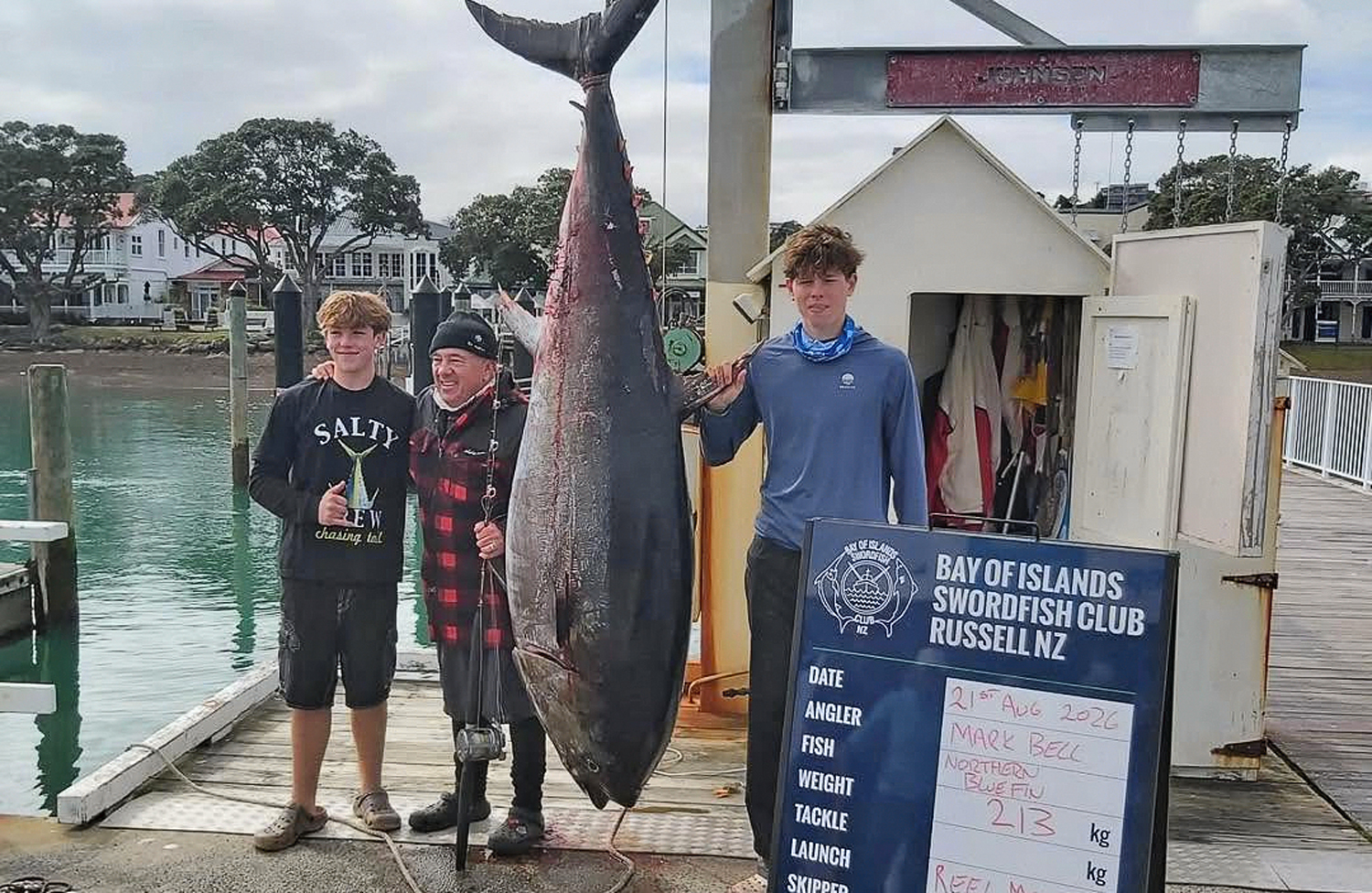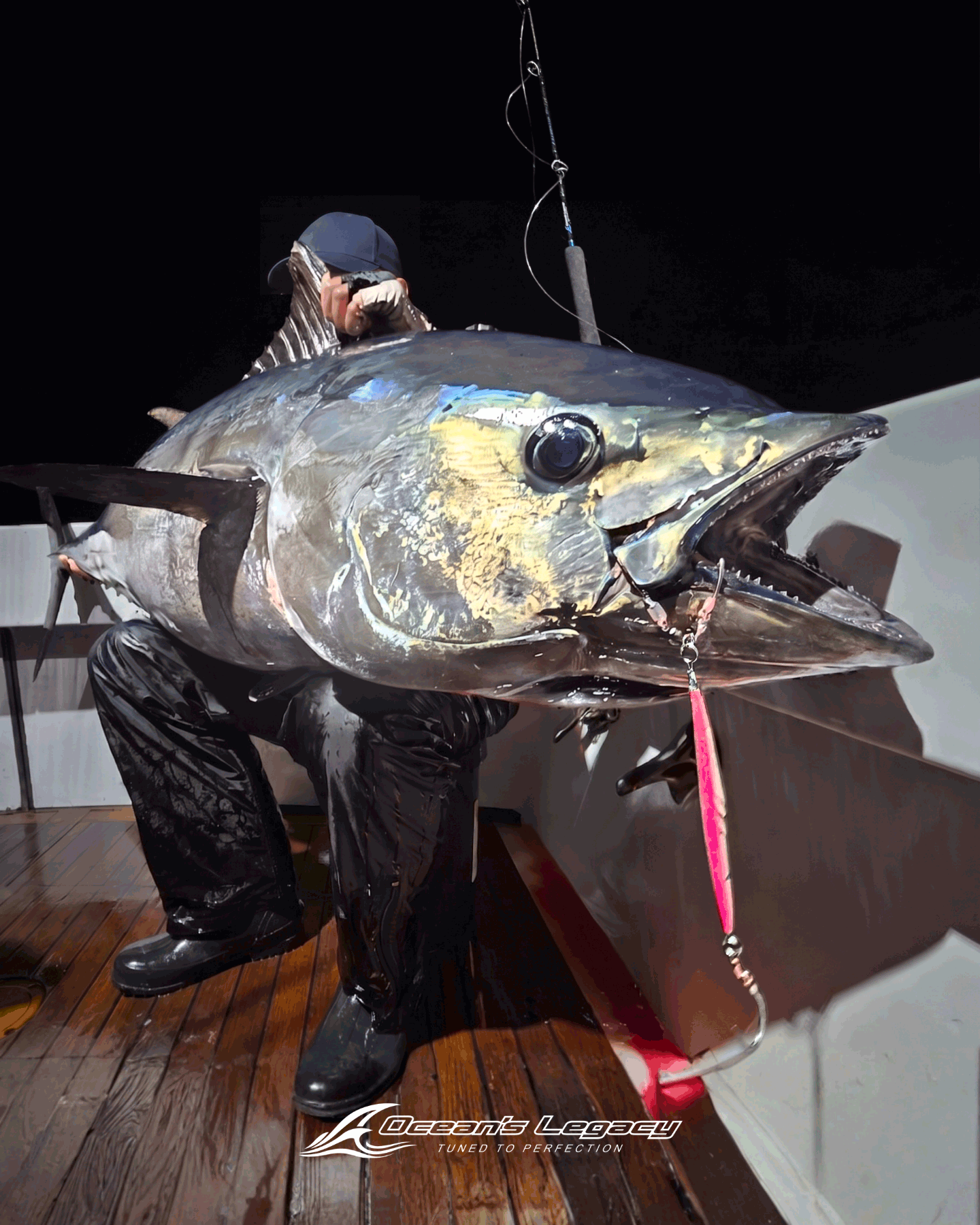
Bluefin After Dark
A new approach to East Cape bluefin jigging As Southern Bluefin Tuna season approaches, more anglers are discovering the advantages of night-time jigging. Ocean's Legacy's Kaz Otsubo shares the tactics and rigging techniques behind this growing trend.
by Kaz Otsubo - Ocean's Legacy NZ
A new approach to East Cape bluefin jigging
Trolling has long dominated New Zealand’s Southern Bluefin Tuna fishery, but a growing number of anglers are discovering that after-dark jigging can be a highly effective alternative. As the sun sets, bluefin often move higher in the water column to feed, creating exciting opportunities for those prepared to fish through the night.
However, success isn’t simply a matter of dropping a jig into the darkness. Consistently hooking and landing these powerful fish requires an understanding of where bluefin hold, how they feed after dark, and the importance of fine-tuning your tackle and hook rigging to maximise hook-up rates and withstand the brutal fights these fish are famous for.
.png)
THE STRATEGIC EPICENTRE: WHY EAST CAPE IS HOLY GROUND
To target these fish effectively, you first have to look at the unique topography of our coastline. While bluefin travel vast distances, the waters encompassing Waihau Bay and the East Cape down to Gisborne stand out as the absolute premier hotspots.
Unlike other pass-through zones where tuna travel rapidly in transit, massive schools of bluefin concentrate heavily in the East Cape and Waihau region. They hold here for extended periods before finally dispersing. This long-term residency gives anglers a prolonged, predictable window to pattern the fish and capitalise on prime bite cycles. Whether you are launching from the popular ramp at Waihau Bay or scouting wider, this region remains the most reliable arena for night-time encounters.
THE BIOLOGICAL TRIGGER: THE NIGHT-TIME ASCENT
Understanding why we jig at night comes down to a natural phenomenon known as diel vertical migration. During daylight hours, small baitfish and plankton dive deep into the abyss to escape visual predators. But as twilight sets in, this entire biomass migrates up toward the surface to feed under the cover of darkness.
The bluefin follow their food. While they hunt in the deep ocean during the day, evening brings them right up into the 20–100m zone – putting them squarely in the crosshairs for jigging. Suspended in the dark, these fish become highly aggressive and stay concentrated for hours, often feeding with remarkable intensity, turning what used to be a daytime trolling game into an explosive night-time vertical fishery.
REFINED RIGGING: SAFEGUARDING AGAINST THE GIANT BITE
When a big bluefin decides to crush a jig in the dark, how your hooks are configured dictates the entire outcome of the fight. As shown in the reference image, there are two distinct ways to rig your assist hooks. Choosing the right one is critical.
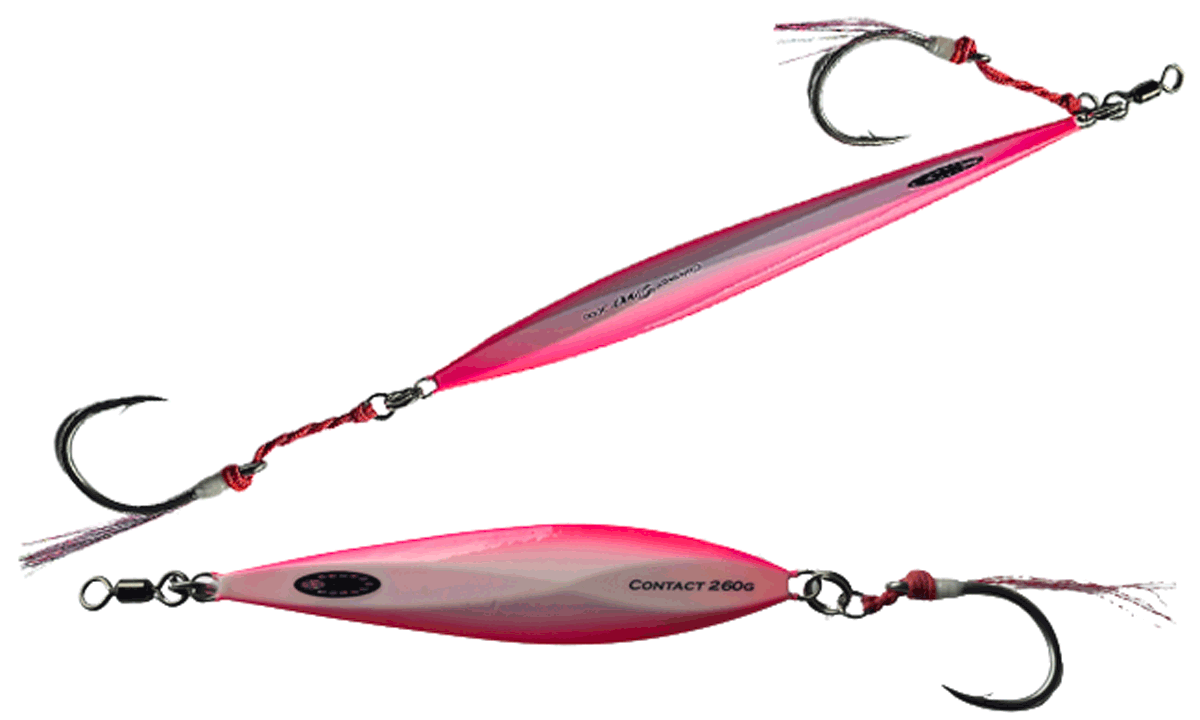
The Standard: Top & Bottom Rigging
This layout features assist hooks rigged at both the top eyelet and the bottom eyelet of the jig.
The Pros: It yields a very high initial hook-up rate because no matter where the tuna slaps the lure, it’s likely to find a point.
The Cons: It sometimes leads to the fish being foul-hooked on its head or side. A sideways-hooked tuna uses the water resistance against its massive flank, making the battle gruelling, long and exhausting. Furthermore, trying to land a green tuna with free, exposed hooks flailing around creates a chaotic and dangerous mess on the deck.
The Refinement: Bottom-Only Rigging
For serious anglers targeting large-sized bluefin, rigging your assist hooks solely on the bottom of the jig is the superior method.
Leader Protection: Large tuna routinely inhale jigs completely. When hooks are placed only at the bottom, the hook sets cleanly inside the mouth, leaving the long metal body of the jig positioned further up. The jig effectively acts as an armor shield, preventing the tuna's abrasive jaw or rough skin from rubbing against and wearing through your leader.
Fight Control: This set-up keeps the fish cleanly pinned on the other side of the leader, ensuring a more direct, controlled fight and a much safer landing process.
Selecting Your Weapon Profile
Matching your jig profile to the target environment is essential for controlling that crucial drop. Ensure your armoury is stocked with at least two or three different colours and two or three different sizes to adapt to changing conditions through the night:
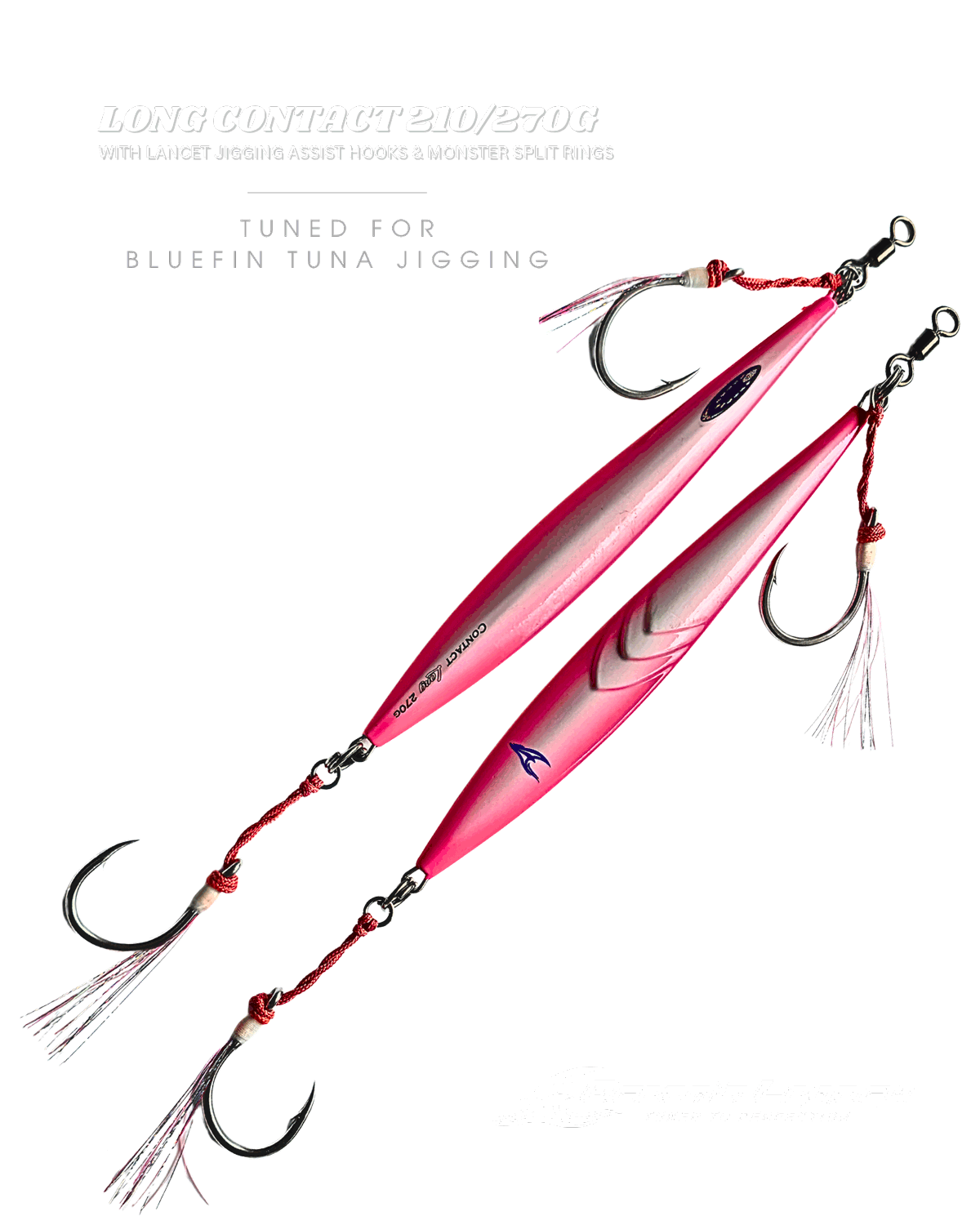
Ocean’s Legacy Long Contact (210g, 270g):
The ultimate all-rounder. It delivers an incredibly erratic, fluttering long-fall action on the drop, but retains the versatility to be worked aggressively up the column to give more enticement. You must have one of these long contact jigs in your tackle box!
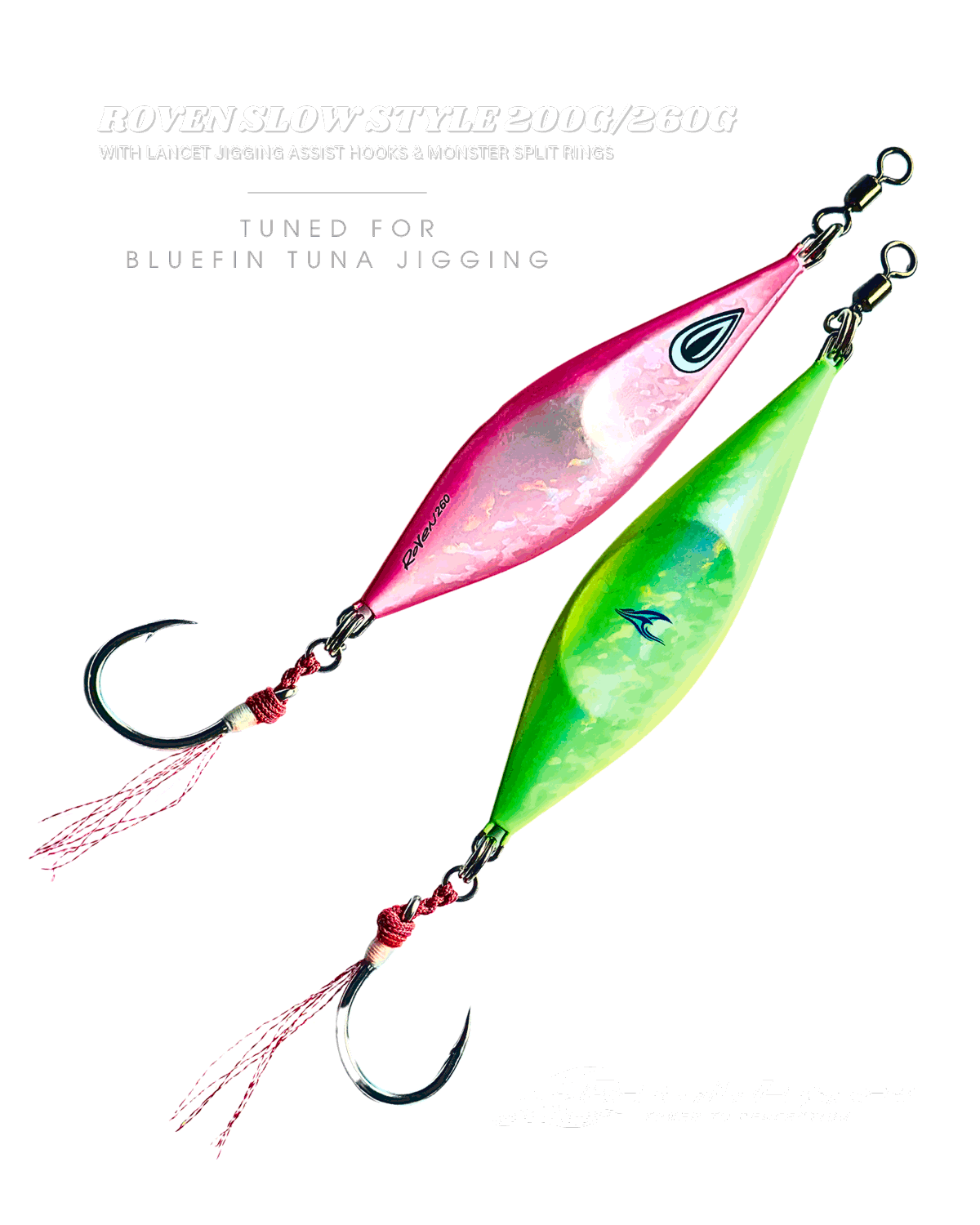
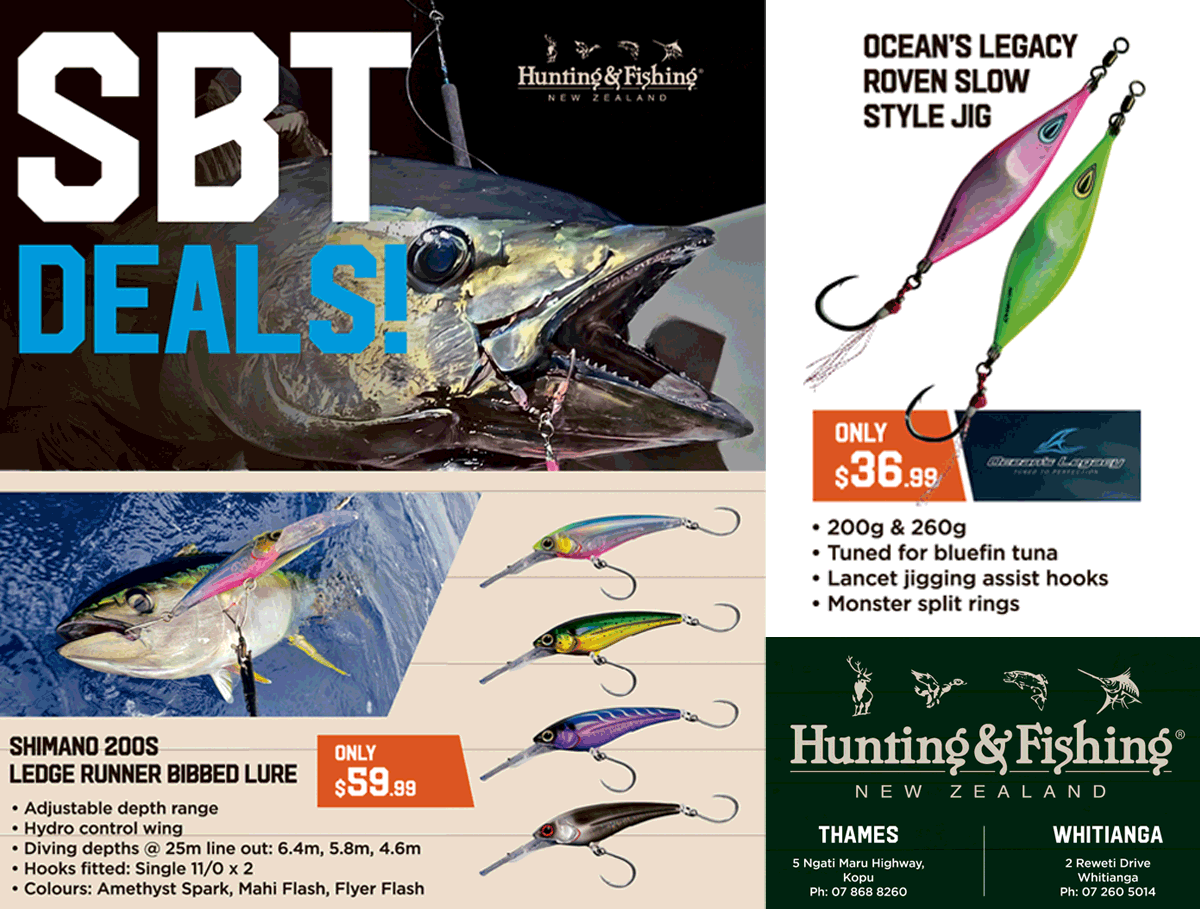
Ocean’s Legacy Roven (200g, 260g):
Built with a distinct wide-body shape engineered specifically for a slow, highly dynamic horizontal flutter. This profile maximises hang-time directly in the strike zone.
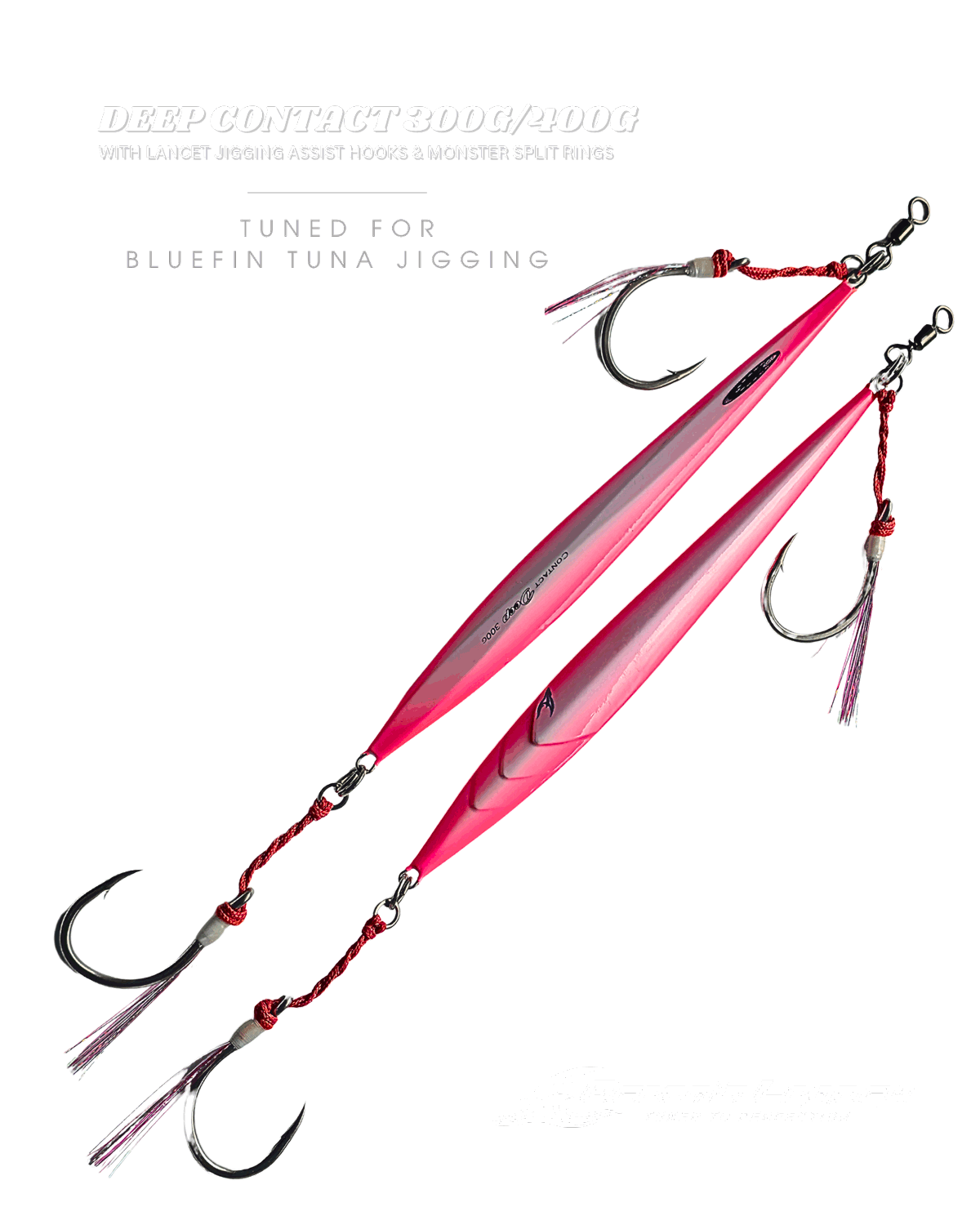
Ocean’s Legacy Deep Contact (300g, 400g):
The mandatory heavy option when dealing with fierce ocean currents or when sonar shows the tuna schools are holding deep in the water column. The incredibly thin profile also makes it remarkably comfortable for the angler to work mechanically when needed.
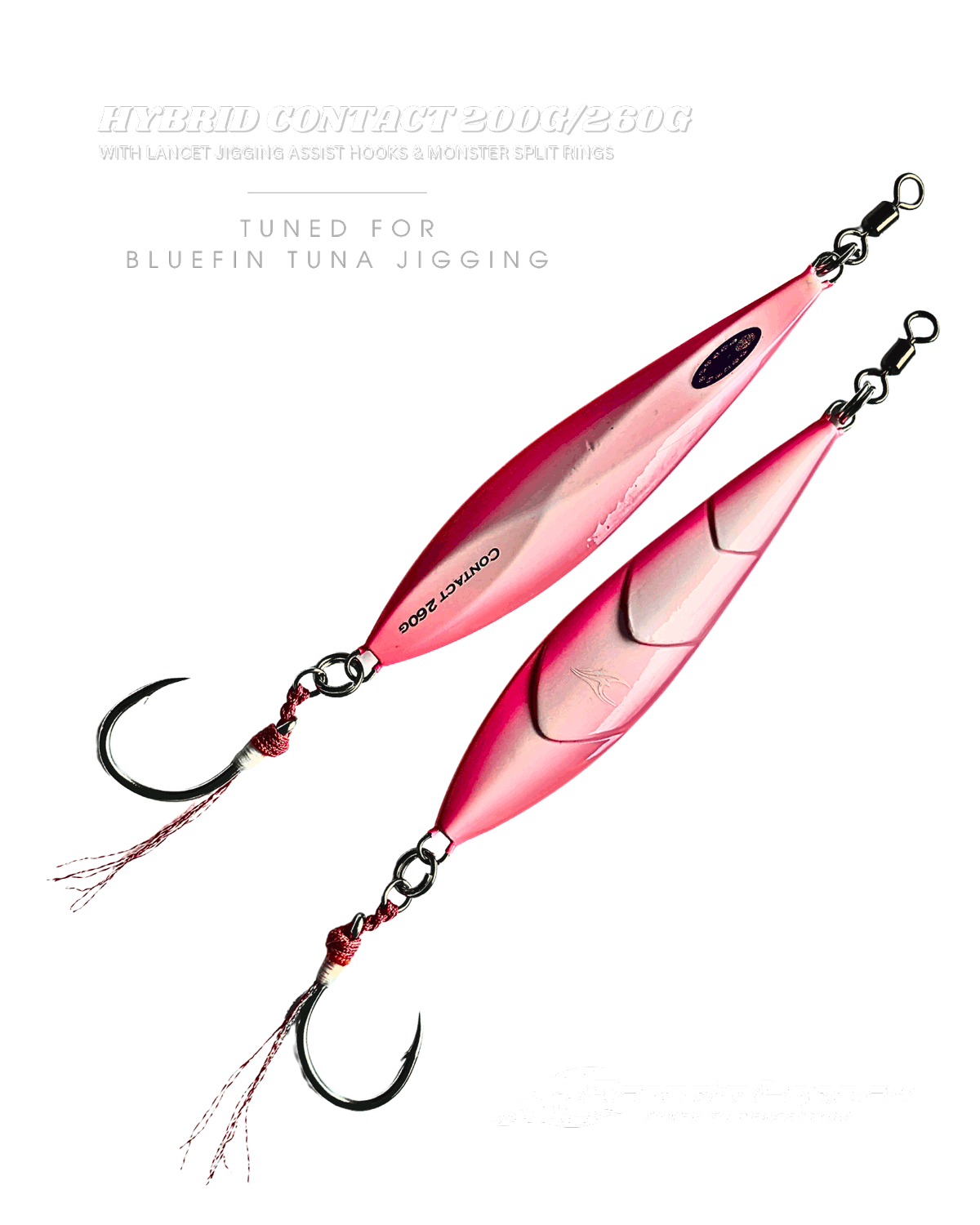
Ocean’s Legacy Hybrid Contact (200g, 260g):
This design features a sharp, lateral darting action that perfectly mimics a fleeing squid. It’s an exceptional choice when worked through a wide vertical span where squid are present. This versatile jig can be worked both ways: ripped up dynamically as a mechanical jig, or dropped down cleanly as a slow pitch jig.
PERFORMANCE ON THE DROP: EXPLOITING THE SLOW PITCH JIGGING ACTION
In the dark, movement is the ultimate trigger. While smaller tuna are easily excited by fast, aggressive mechanical jigging, the true giants of the school prefer to conserve energy. They hunt for the easiest meals – the injured, stunned, or dying baitfish.
Because of this, the falling action of your jig is where the magic happens. By incorporating the slow pitch jigging techniques to create sudden drops and long, deliberate pauses into your cadence, you let gravity do the work. A slow lift followed by a controlled, fluttering fall mimics a dying baitfish perfectly and provokes devastating reaction bites from the largest apex predators holding deep in the school.
Beyond its lethal presentation, embracing this gentle and rhythmic slow pitch jigging style is significantly easier on your body. It allows you to sustain peak performance through hours of intense night shifts without the intense physical exhaustion that comes with non-stop, high-speed mechanical jigging.
THE TACTICAL BLUEPRINT FOR THE NIGHT
To execute this strategy flawlessly on the water, follow this sequence:
1. Daylight Preparation: Use the afternoon light to tie your knots, check your drag settings, and rig your jigs. Trying to manage heavy connection rings and terminal tackle in the pitch-black is a recipe for error.
2. Sonar Reconnaissance: Before dropping lines, cruise the grounds to locate dense bait schools using your fishfinder.
3. Deploy and Control: Drop your jig into the 20–100m feeding zone. Instead of overworking the lure like traditional mechanical jigging, apply a slow lift, execute a half-wind, and drop the rod tip smoothly to follow the slack line. Once you start feeling the full weight of the jig return, repeat the cadence. The core key is letting the jig flutter down naturally – and you must be completely ready to strike the moment the line goes slack or hesitates on the drop.
4. Trust the Gear: Ensure your set-up is built around tuna-rated power, such as the Ocean’s Legacy Ahi Spec (PE8/PE10) or the compact Vengeance (PE6-10) series, paired with a reliable, high-capacity overhead reel pushing 20kg+ of lever drag and spooled with a minimum of 150lb fluorocarbon leader. Ensure zero terminal weak points by using heavy-duty hardware like Lancet Heavy Assist Hooks (9/0 or 11/0) and Monster Split Rings.
The blueprint is simple: find the fish around the East Cape, protect your leader with a bottom-only rig, and focus heavily on a slow, fluttering fall. It requires patience, but when the reel finally screams in the midnight quiet, it’s a feeling like nothing else on earth.
Goodluck!
Kaz Otsubo
Owner Operator
Ocean’s Legacy New Zealand